Rhode Island Housing Market Trends: A Data-Driven Look at Cranston, Cumberland, Smithfield, Lincoln & Beyond
Jason Pacheco • January 3, 2026

Rhode Island Housing Market Trends: A Data-Driven Look at Cranston, Cumberland, Smithfield, Lincoln & Beyond

If you’ve been asking “Is now a good time to buy or sell real estate in Rhode Island?”, you’re not alone. It’s one of the most common questions I hear from homeowners, buyers, and investors across Northern and Central Rhode Island.

Instead of opinions, headlines, or fear-based predictions, let’s look at real data — and what it tells us about the housing market in:

  • Cranston
  • Cumberland
  • Smithfield
  • Lincoln
  • Warwick
  • Coventry
  • North Providence
  • Johnston

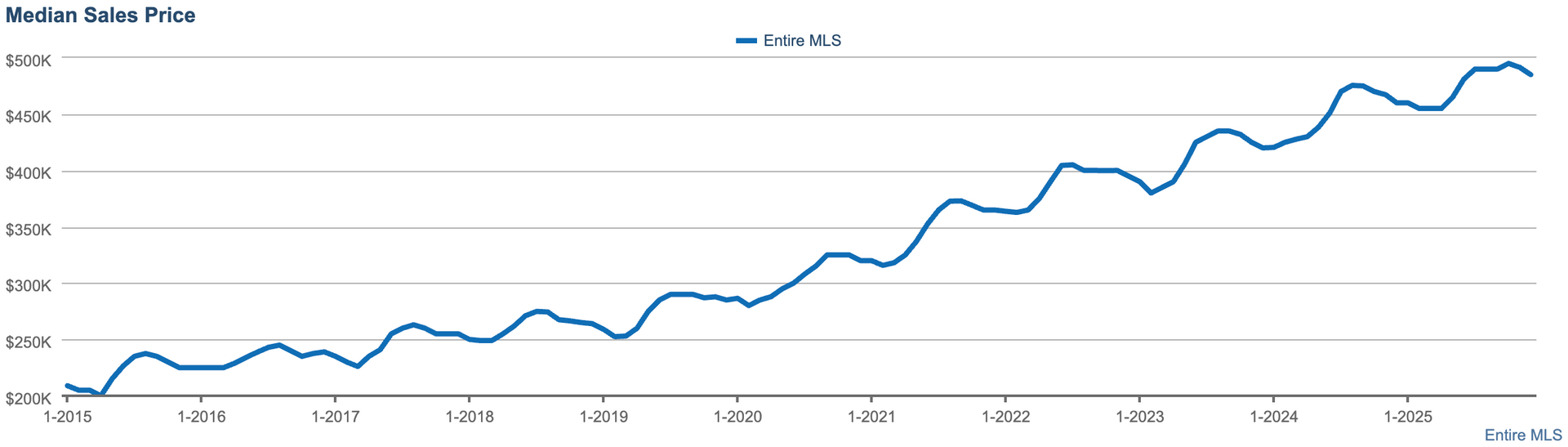
10 Years of Rhode Island Home Prices: What the Data Shows

Over the last decade, Rhode Island home values have followed a clear, consistent trend:
they move upward over time
.

Yes — there are moments where the market flattens.
Yes — there are seasonal slowdowns.
But zoom out far enough, and the direction becomes obvious.

The housing market doesn’t move like an elevator

It moves like a staircase.

There are pauses.
There are landings.
But over 10 years, each step builds on the last.

This is exactly what we see when analyzing long-term price trends across Rhode Island communities

Untitled document (29) (1) (1)

.

“Realtors Always Say Buy Now” — Here’s the Honest Truth

This is a fair criticism — and one I hear often.

But here’s the reality:

Waiting for the “perfect time” to buy real estate is like waiting for gas prices to return to what they were five years ago.

They might dip temporarily.
But historically, they don’t move backward long-term.

The same applies to housing.

The data shows that:

  • Yesterday was usually cheaper than today
  • Today is often cheaper than tomorrow
  • Time in the market beats trying to time the market

This isn’t hype — it’s math.

What This Means for Buyers in Rhode Island

If you’re buying in places like Cumberland, Smithfield, Lincoln, or Coventry, waiting too long can quietly cost you more than people realize.

Even small increases in home prices can mean:

  • Higher monthly payments
  • Larger down payments
  • Tougher competition
  • Fewer options

Interest rates change. Markets cool and heat up.
But
long-term ownership has historically rewarded patience, not hesitation.

What This Means for Sellers in Cranston, Warwick & Johnston

If you’re a homeowner thinking about selling, especially in Cranston, Warwick, Johnston, or North Providence, understanding market timing vs market positioning is key.

Pricing, condition, demand, and local inventory matter far more than guessing the exact “top.”

Data-driven sellers win because they:

  • Price correctly from day one
  • Understand buyer behavior
  • Leverage current demand instead of reacting to headlines

Why Local Market Knowledge Matters More Than National Headlines

Rhode Island is not a single market — it’s a collection of hyper-local micro-markets.

What happens in Cranston doesn’t always mirror Smithfield.
What works in
Warwick may not apply to Cumberland.

That’s why real expertise means:

  • Studying neighborhood-level data
  • Tracking inventory, absorption rates, and price trends
  • Understanding buyer psychology locally — not nationally

Final Thought: Numbers Don’t Lie

The biggest takeaway from a decade of Rhode Island housing data is simple:

Real estate rewards those who play the long game.

If you’re buying, selling, investing, or just trying to understand your options — a personalized strategy based on real numbers always beats guessing.

If you want help deciding what makes sense for your situation, reach out anytime.
Data is powerful — but only when it’s applied correctly

By Jason Pacheco • September 28, 2026
Inherited a House in Rhode Island? Here's What to Do Next
By Jason Pacheco • September 28, 2026
How to Sell a House By Owner in Rhode Island: A Homeowner's Guide for 2026
By Jason Pacheco • September 23, 2026
Alpine Estates Homes for Sale in Cranston, RI: Tour 15 W Bluebird Lane
By Jason Pacheco • September 17, 2026
If you own a house in Rhode Island that needs work, you may be wondering whether to fix it up and list it or sell it as-is for cash. After being involved in more than 200 real estate transactions, I’ve seen both options make sense. The right decision usually depends on the condition of the home, how quickly you want to sell, and how much money you want to walk away with. What Does Selling As-Is Mean? Selling as-is means selling the property in its current condition without making major repairs or improvements first. This can make sense if the house needs: Roof, heating, electrical, or plumbing work Cosmetic updates Cleanout or junk removal Kitchen or bathroom renovations General deferred maintenance It can also be a good option for inherited homes, rentals, estates, or vacant properties. Selling Your Rhode Island House for Cash A cash home buyer may allow you to sell without making repairs, staging the house, or dealing with mortgage financing. For someone thinking, “I just want to sell my house fast in Rhode Island,” this can be appealing. The tradeoff is that cash offers are often lower than what the house may sell for on the open market because the buyer has to account for repairs, holding costs, and risk. Listing With a Realtor Listing gives your home exposure to more buyers, which can help increase the potential sale price. And you do not always have to renovate before listing. Sometimes a few small improvements, cleaning, or decluttering is enough. In other cases, listing the house exactly as-is may still make sense. The goal is not to make the home perfect. The goal is to avoid spending money on improvements that will not give you a return. Cash Offer vs. Listing A cash sale may make sense if: The property needs major repairs You inherited the home You are a landlord who wants out You need to sell quickly You do not want to deal with renovations or showings Listing may make more sense if: The property is in decent condition Only minor repairs are needed You are not in a major rush You want maximum exposure to buyers Your goal is to maximize your potential proceeds Neither option is always better. What matters most is what you actually walk away with after all costs. Should I Fix My House Before Selling? Not necessarily. Before spending money, ask: “If I spend $10,000 on this improvement, how much additional value could it realistically create?” Small improvements such as paint, cleaning, landscaping, lighting, and minor repairs can help. Major renovations should be looked at carefully before you spend the money. Can I Sell a House That Needs Repairs in Rhode Island? Yes. You may be able to: Sell directly to a cash buyer List the property as-is Make a few improvements and list Fully renovate before selling The best choice depends on your property and your goals. EXPLORE OUR SELLING OPTIONS
By Jason Pacheco • September 10, 2026
Selling a House in Rhode Island: 5 Things to Know
By Jason Pacheco • September 5, 2026
Sell My House Fast in Rhode Island: Cash Offer vs. Listing With a Realtor
By Jason Pacheco • September 3, 2026
This is a subtitle for your new post
By Jason Pacheco • September 2, 2026
How Long Does It Take to Sell a House in Rhode Island in 2026?
By Jason Pacheco • August 26, 2026
How Can I Sell My House Fast in Rhode Island?
By Jason Pacheco • July 30, 2026
Is It Worth Hiring a Buyer's Agent When Buying New Construction? (Absolutely Yes)